
Stinson Plumbing
Septic Tank and Sewer Service for Benton, Paducah and Western Kentucky
Sewer line repair, septic diagnostics, drain field troubleshooting and camera inspection, priced flat before any digging starts.
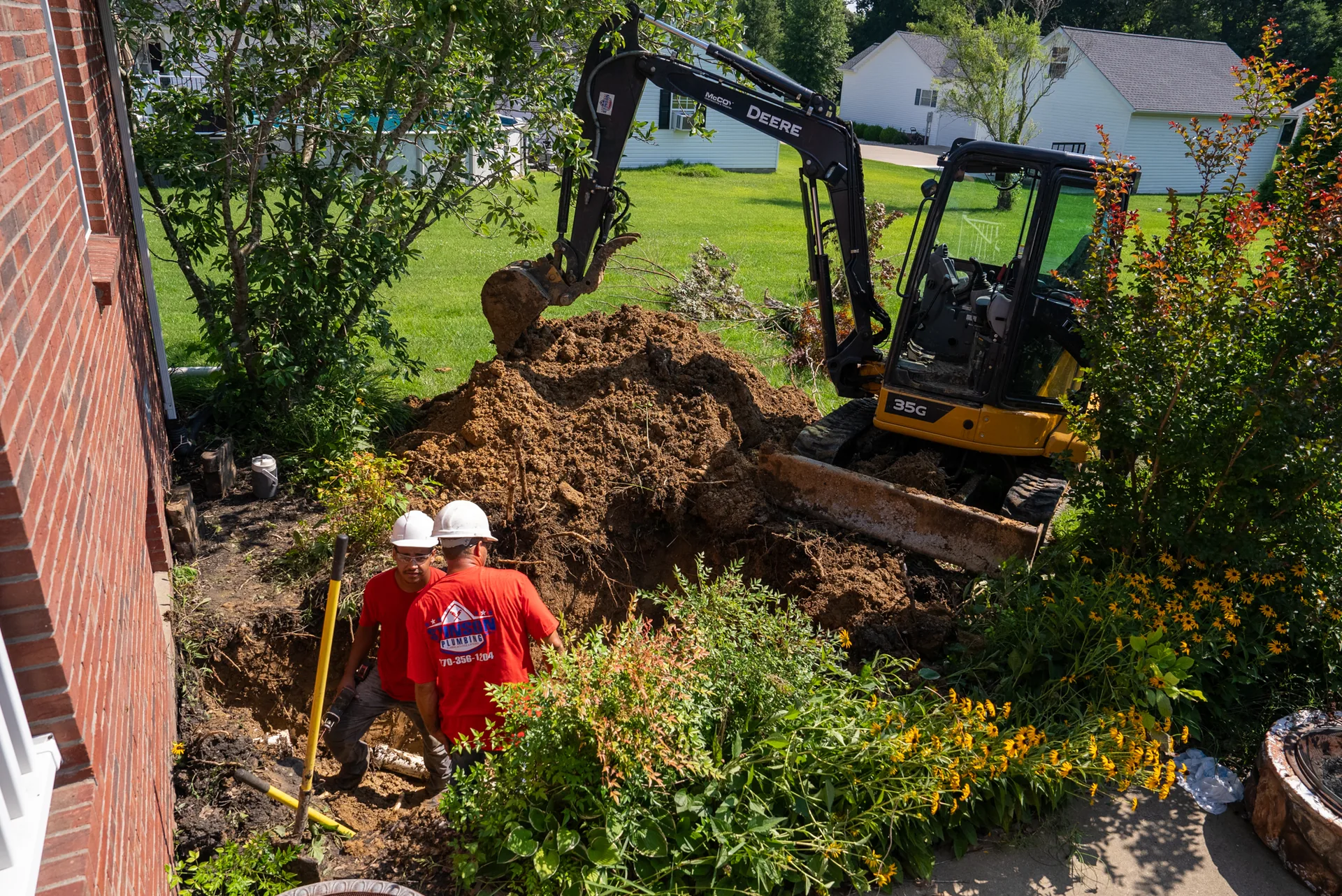
A septic tank and sewer problem almost never starts the day you notice it. The backup in the basement floor drain, the soft wet ground out over the field lines, the toilet that bubbles every time the washing machine drains, that is the late chapter of something that has been building underground for months. Stinson Plumbing works septic and sewer systems across Benton, Paducah and the surrounding Western Kentucky counties, and the first thing we do on any call is figure out what is actually failing instead of clearing a line and calling the job done.
We run two offices, one in Benton and one in Paducah, with live dispatch around the clock for the calls that cannot wait for business hours. When waste is coming up through a shower drain at 11 at night, a callback window is no help to you. You need a truck on the way. Call (270) 356-1204 and you reach a real person who can move one.
What is actually going on under your yard
The line that carries waste out of your house is called the lateral, and around here its age usually tells the story. Older neighborhoods in Benton and Mayfield were plumbed with vitrified clay and cast iron, both jointed every few feet. Those joints are exactly where roots and groundwater get in. Some mid-century homes still have Orangeburg pipe, a tar-impregnated fiber line that softens and goes oval with age. Subdivisions built from the 1990s on are almost all PVC, which holds up well but still bellies if the bedding settles.
Roots are the most common failure we pull a camera out for. Oak, maple and willow chase the steady moisture and nutrients inside a sewer line, and a hairline gap at one clay joint is all the opening they need. A few root hairs turn into a dense mat that grabs paper and grease until the pipe chokes off. Frost movement and ground settling do quieter damage, dropping one section low so it holds standing water and solids. That low spot, a belly, is where repeat clogs come from no matter how many times the line gets snaked.
Out past the city sewer boundaries, most properties run on a private septic system, and that is a lot of the homes we serve in Marshall, Graves and Calloway County. Waste flows to a tank, separates, and the liquid moves through a distribution box out to the drain field where the soil treats it. When any stage of that chain stalls, the whole system slows. Low-lying lots near Kentucky Lake and Lake Barkley have it harder, because a high seasonal water table leaves the field saturated and unable to absorb, which shows up as soggy ground and slow drains every wet spring.
Waiting is what turns a fixable line into an expensive one. A backup that reaches finished living space stops being a pipe repair and becomes a water-damage cleanup. A drain field run too long while overloaded can stop accepting effluent for good, and replacing a field costs many times what an early diagnosis and repair would have. The sooner we see it, the smaller the fix tends to be.
What we handle
Sewer camera inspection
We feed a sewer camera down the lateral from a cleanout toward the city tap or the septic tank, and you watch the inside of the pipe on a screen as it goes. Roots, cracked sections, offset joints, bellies and collapses all show up clearly. We locate the head from the surface and mark the spot, so if any excavation is needed it lands right on the problem.
Spot sewer repair
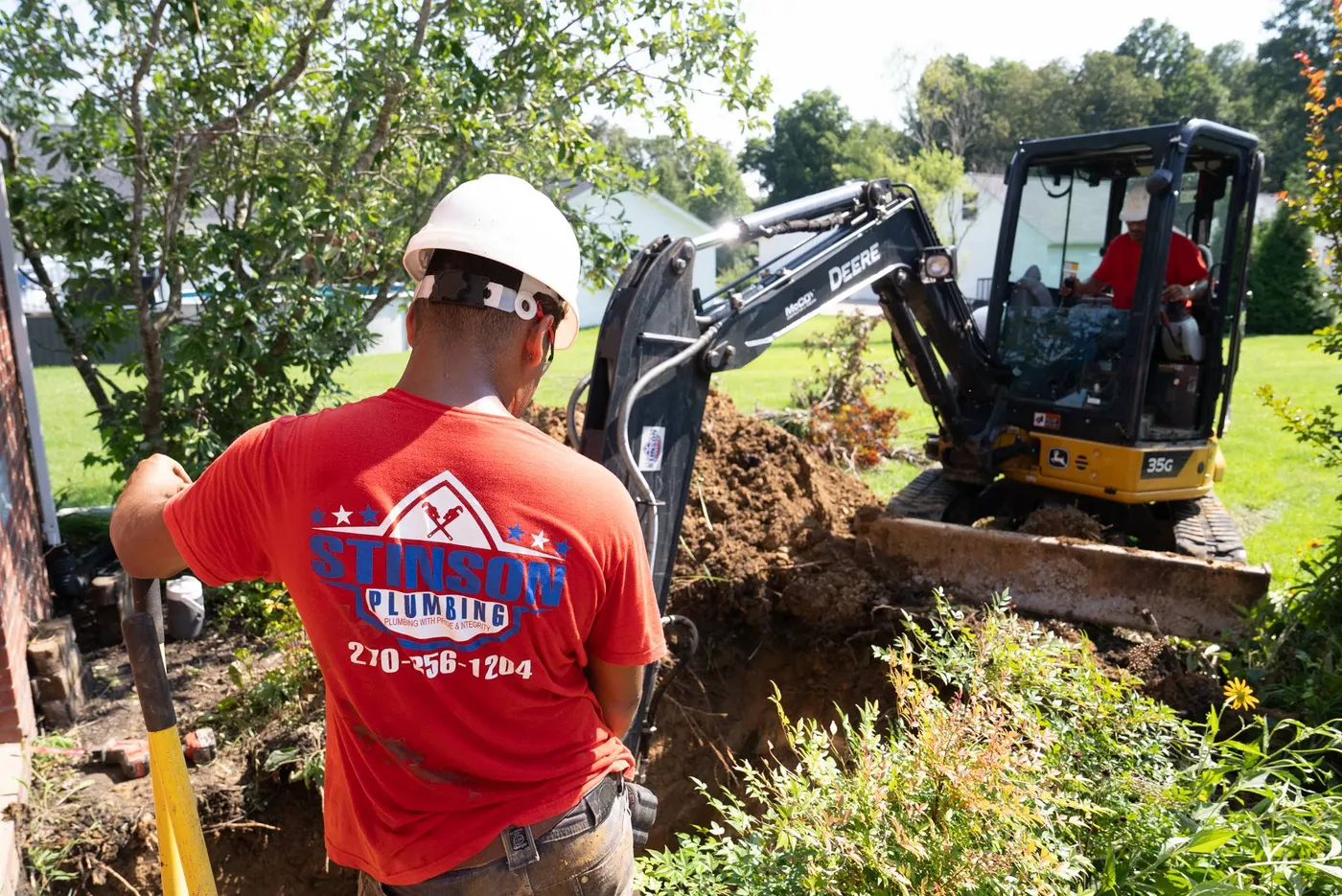
When the trouble is one cracked length or a single root-packed joint, there is no reason to trench the whole yard. We open the damaged section, swap it out, tie it back into sound pipe and backfill. Targeted work, priced before we start.
Full lateral replacement
Some lines are past patching. If the camera shows collapsed clay, cast iron rotted thin, or several bellies along the run, a new PVC lateral from the house to the connection point is the honest call. You stop paying for repeat clearings that never hold.
Hydro jetting
A snake pokes a channel through a clog. Hydro jetting scours the full inside wall of the pipe with high-pressure water, stripping grease, scale and root hair back to bare pipe. We jet after the camera confirms the line is solid enough to take it, never blind.
Septic line, D-box and drain field work
On the plumbing side of a septic system we repair the line from the house to the tank, the section roots and settling hit first. We diagnose slow flow at the distribution box, check whether field lines are saturated or clogged, service effluent and lift pumps along with their floats and alarms, and set risers so a buried tank lid comes up to grade for easy future pumping.
New construction and commercial
We rough in sewer and septic for builders and coordinate the schedule directly with the GC on new construction. On the commercial side we handle grease-heavy kitchen lines, multi-unit laterals and the recurring backups that come with older downtown buildings.
We diagnose before we dig
Guessing at a buried problem is how yards get torn up for nothing. Our order of operations is simple. We camera the line first, find the exact fault and its depth, mark it on the surface, then hand you a flat written price for the specific repair. No hourly meter running while a crew pokes around. You know the number before the first shovel goes in.
Septic repairs and replacements often involve the county health department, and we pull the permits and schedule the inspections that go with that work so it is documented and signed off. For build and remodel jobs we slot our portion into the GC's timeline instead of holding up other trades. Most spot sewer repairs are a one-day job. A full lateral on a standard lot usually runs a day or two depending on depth, driveway crossings and what is in the way.
Where we work, and why the job changes by area
Stinson covers Benton and Marshall County, Paducah and McCracken County, Mayfield and Graves County, Murray and Calloway County, Madisonville and Hopkins County, and out to Owensboro and Daviess County, along with Calvert City, Draffenville, Hardin, Gilbertsville and the lake communities around Kentucky Lake and Lake Barkley. In and around Paducah the Old Mayfield Road office keeps a second line open at (270) 906-9004.
The work is not the same everywhere we go. Inside Benton, Paducah and Mayfield city limits you are usually tied to a municipal main, so a failure is a lateral problem between the house and the street. On rural acreage in Graves and Calloway County it is a full septic system, and the answer is more likely a drain field or D-box question than a sewer tap. Lake-area cabins bring their own pattern, with seasonal use, winterizing, and high-water-table fields that struggle in spring.
That local read matters because it changes the diagnosis before we ever arrive. A slow drain in a 1960s Benton bungalow on city sewer points one direction. The same complaint at a seasonal place near Gilbertsville points somewhere else entirely. We dispatch with that in mind.
Repair it, replace it, or just pump it
Homeowners often call sure they need the whole line dug up, and just as often call sure a pump truck will fix everything. The truth is usually in between, and the camera settles it. A single bad joint gets a spot repair. A line that is failing in several places gets replaced once instead of patched four times. A septic tank that simply has not been pumped in years may just need pumping, while a saturated field needs a different plan.
On septic systems specifically, slow drainage is not automatically a plumbing repair. It can be a clogged house-to-tank line, a tank overdue for service, a failing distribution box, or a field that has reached the end of its life. We check the plumbing side honestly and tell you which it is, so you are not paying for a repair that does not solve the actual problem.
Our work
Recent sewer and septic work

Good to know
Sewer and septic questions
How can I tell if my property is on city sewer or a septic system?
Inside the city limits of Benton, Paducah or Mayfield you are most likely tied to a municipal sewer main. On rural acreage and most large lots in Marshall, Graves and Calloway County you are on a septic tank and drain field. A tank lid or cleanout in the yard usually gives it away, and your property survey or the county health department can confirm it.
What does a sewer camera inspection actually find?
The camera runs the lateral from a cleanout to the city tap or septic tank and puts the inside of the pipe on a screen while you watch. It shows root intrusion at joints, cracks, offset sections, bellies that hold water, and outright collapses. Because we mark the fault from the surface, any digging is aimed straight at it instead of opening the whole run.
Can tree roots really break a sewer lateral?
Yes, and they are one of the most common reasons older lines fail around here. Oak, maple and willow roots follow the moisture and push into any gap at a clay or cast iron joint. A few hairs swell into a mat that traps paper and grease until flow stops. Jetting clears the mat, and the camera tells us whether the joint also needs a repair.
My septic is draining slow. Is that a pumping problem or a plumbing problem?
It can be either, which is why we look before we quote. An overdue tank can back up on its own, but slow drainage can also mean a clogged house-to-tank line, a failing distribution box, or a drain field that is saturated and no longer absorbing. We check the plumbing side and tell you straight whether you need a pump truck, a repair, or field work.
How often should an older home have its sewer line scoped?
For a house past 25 years, or any home with a history of backups, every three to five years is a sensible rhythm. If you are buying an older property, scope the line before closing. A camera inspection costs far less than a collapsed lateral discovered your first week in the house.
Do you offer emergency service for a sewer backup?
Yes. Sewer backups do not keep office hours, so we keep live dispatch running 24 hours a day. Call (270) 356-1204, describe what is happening, and we will get a truck headed your way and arrive ready for the problem you reported.
Need a plumber you can count on?
Same crew, two offices, one promise: we diagnose before we dig and we price the repair before we start. Get it on the schedule at (270) 356-1204 or request service online. Flat price, no hourly meter, live dispatch 24/7 when it cannot wait.
Benton, Paducah, Mayfield, Owensboro & Western Kentucky